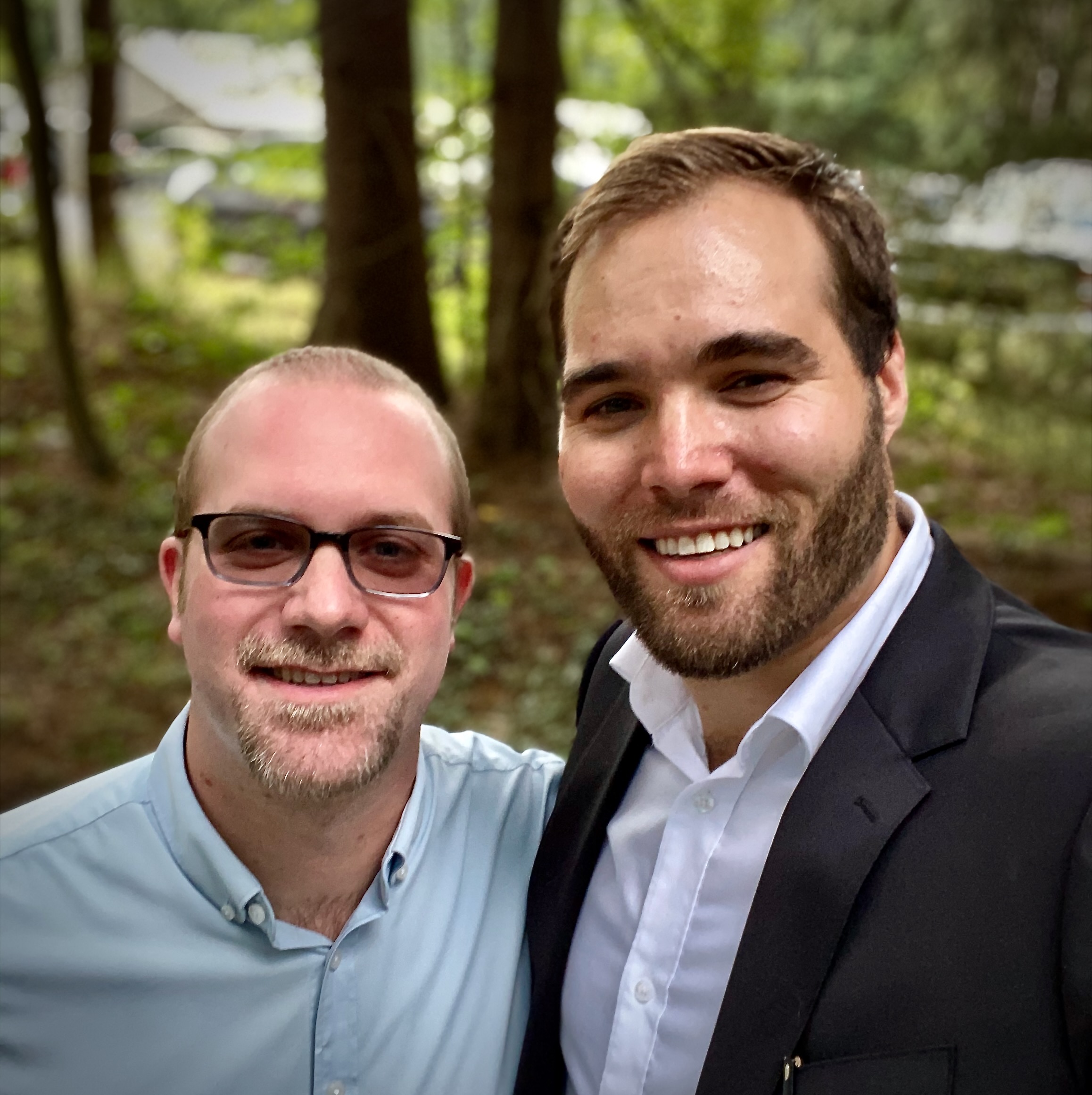
This weekend I watched the Season 18 finale of RuPaul’s Drag Race. I try to watch it religiously — partly because I know the significance of supporting a show like this, of making sure representation keeps getting made.
And partly because, some weeks, it’s one of the only gay things I get to do in a day.
That sentence sat heavier than I expected when I wrote it down. But it’s true, and I think it’s true for a lot of us right now. So I want to write about what that show means to me, and what it’s taught me about the work I do.
For 18 seasons, Drag Race has done something most workplaces still struggle with: it creates a space where people can show up as their fullest, most authentic selves — and be celebrated for it. Not tolerated. Celebrated.
As a learning and development practitioner, I think about psychological safety constantly. We cite Amy Edmondson. We build it into leadership programs. We measure it in engagement surveys. But the real test isn’t whether people feel safe to disagree in a meeting.
It’s whether they feel safe to be seen.
Every performer on that stage has a story about being told — directly or through a thousand small signals — that who they are is too much, too loud, too different, too risky. And yet they kept going. They found mentors. They built chosen family. They turned critique into craft. They made their visibility a form of teaching.
I know something about that journey, because it’s my own.
The Long Way Out
My coming out story isn’t glamorous, and National Coming Out Day usually passes without me marking it. I was a closeted Catholic school kid with a girlfriend. I got made fun of for being different — I didn’t like sports, I hung out with girls, I liked things boys weren’t supposed to like. But that was just a phase, right?
My first real job, the one I worked through high school and into college, was the first place I felt something different. Nobody asked who I was dating. Nobody cared that I talked a little more feminine than the other guys. I showed up, I worked hard, I was kind to people, and they were kind back. They respected me.
That might not sound like much. But in a small town, in that era, for that kid — it was everything. It was one of the first times I felt accepted. And it gave me fuel. It made me feel, maybe for the first time, that who I was wasn’t wrong.
Around that same time, Rent came out in theaters. I’m dating myself, but stay with me. I was going to Catholic church every week. I was going through confirmation. I was being told, constantly, that people like me were sinners and going to hell. Some of my friends were starting to come out and date people of the same gender, but the voices closest to me were still overwhelmingly voices of rejection.
And then I saw Rent. A story about people living untraditional lives. Struggling to pay rent, working around the margins, not always supported by their families — but finding love and family in the community they built for themselves. Straight, gay, trans, loving each other messily and fiercely, navigating the HIV crisis.
I didn’t understand all of it at the time. But the representation cracked something open. It was another piece of permission to accept myself a little more.
I came out slowly, quietly, through college. By the time I graduated, I was out — though I didn’t necessarily talk about it at work. I didn’t have to. I worked in environments where I could mention a date the way my coworkers mentioned their own. Where I could say I’d gone to a bar or restaurant that happened to be in the gay part of town, and nobody flinched. That quiet, unforced acceptance let me relax into myself.
And then the safe spaces the community built for itself did the rest. Clubs, restaurants, events where I could dress how I wanted, share the experiences of coming out, talk about what we still couldn’t say to our families. Those spaces taught me what belonging feels like.
What Acceptance Builds
I reflect on all of this often, because I was genuinely fortunate. I had safe spaces at work and outside of it that let me grow into myself. And because I had those spaces, I was able to commit to my work. I asked questions. I gave feedback. I took risks. I grew.
Years later, during the pandemic, the #MeToo movement, and the murders of George Floyd and Breonna Taylor, I was working for women leaders and alongside Black colleagues who were carrying grief and fear I could only witness from the outside. Because I’d been given safe spaces, I knew how to try to create one. I listened. I tried to show up as an ally. I asked questions, and more importantly, I let people’s answers change my understanding.
This was before psychological safety had fully crossed over from academic research into everyday L&D practice. The term had been around in Amy Edmondson’s work since the late 1990s (Edmondson, 1999), but it didn’t really enter the mainstream conversation until after Google’s Project Aristotle findings landed in 2015 and 2016 (Duhigg, 2016) — and even then, most of us building the work on the ground were still reaching for language to describe what we were trying to create. But looking back, that’s exactly what we were doing. Building the conditions for each other to stay human at work during a moment that was actively trying to break us.
That experience is what I carry into every L&D engagement now. Because here is what I’ve come to believe:
Psychological safety isn’t a module. It’s a condition.
You can’t train your way into it if the conditions aren’t there. You can run the best workshop in the world, and it will evaporate the moment an employee walks back into a team where they aren’t actually safe to be themselves.
But you can’t skip the training either. Because you can’t assume everyone arrives with the same baseline of acceptance, the same respect for difference, the same self-awareness about their own language. People come from different places. Some are working through their own sexuality. Some have children who are transitioning. Some are deeply religious and still learning how to hold their faith alongside other people’s full humanity. Some have never thought about any of it.
That’s why I believe psychological safety has to show up in onboarding, not as a one-hour compliance checkbox, but as a real signal to every new hire: this is how we treat each other here. This is the floor, not the ceiling.
The research is clear: when people hide parts of who they are at work, cognitive load goes up and performance goes down (Madera et al., 2012). When they feel seen — consistently, by leaders whose public and private voices match — they grow. It’s that simple and that hard.
The Harder Truth
Here is the part of the work we don’t talk about enough.
There is often a gap between the leadership a company performs and the leadership employees actually experience. The public values deck says one thing. The closed-door conversation says another. Anyone who has spent time in L&D has watched a leader champion “belonging” on a town hall stage and then heard how they really talk about the people who work for them — or the customers they serve.
Sometimes the gap is awkward. Sometimes it’s demeaning language about LGBTQ+ employees, or women, or people of color, said casually in rooms where leaders assume everyone agrees. It is harassment, even when no one files a complaint. And it shapes every learning initiative that follows.
Culture is not what we put in the handbook. Culture is what leaders say when they think no one is listening.
When a leadership team publicly preaches belonging and privately trash-talks the people they’re supposed to be leading, it doesn’t stay contained. It leaks. It shapes who gets listened to in meetings, who gets promoted, whose ideas are taken seriously, and who learns to make themselves smaller to survive. That gap is not a minor HR issue. It is the single biggest predictor of whether a psychological safety initiative will actually land or quietly die.
And I’ll say this plainly: being respectful of other people is not a political position. It is a professional one. Every one of us, myself included, has said something that landed wrong. I’ve been corrected, I’ve corrected others, and the work of creating safety is not about being perfect — it’s about being willing to hear the feedback when it comes. What corrodes an organization is not imperfection. It’s leadership that believes it’s above correction.
What’s Next
I started this piece talking about a television show, and I want to come back to it before I close.
What RuPaul’s Drag Race does every week — and what it did again in the Season 18 finale — is model something most workplaces haven’t figured out yet. It takes people who have been told their whole lives that they’re too much, and it puts them on a stage where being too much is the job. It gives them direct feedback. It makes them integrate it in real time. It pairs them with mentors. It celebrates reinvention. And it does all of it in public, without asking them to be smaller to make anyone else comfortable.
That’s a learning culture. That’s what one looks like when it works.
I’m in a season of searching for what’s next in my career, and I’ll be honest: alignment matters to me more than it ever has. Not a perfect company — those don’t exist. But one where what leaders say in the all-hands is recognizably the same as what they say in the hallway. Where employees aren’t asked to smile through comments that would never survive being said out loud in the town hall. Where I can do the work of building learning cultures for others because the culture around me makes that work possible.
In a moment when a lot of people are being told, loudly, that their visibility is the problem, I think the most radical thing an L&D function can do is build cultures where every employee can say “this is who I am” and be met with curiosity instead of caution. And to keep telling the truth about the gap between stated values and lived ones, because closing that gap is the actual work.
That’s always been the work. It’s just that the stakes feel higher now, for more people, than they have in a long time.
To the Season 18 cast: thank you for the reminder of what’s possible when people are given room to be exactly who they are. And thank you for showing up, week after week, so that some of us out here — closeted, out, in between, ally, exhausted, hopeful — have something to come home to.
That matters more than you know.
References
Duhigg, C. (2016, February 25). What Google learned from its quest to build the perfect team. The New York Times Magazine. https://www.nytimes.com/2016/02/28/magazine/what-google-learned-from-its-quest-to-build-the-perfect-team.html
Edmondson, A. (1999). Psychological safety and learning behavior in work teams. Administrative Science Quarterly, 44(2), 350–383. https://doi.org/10.2307/2666999
Madera, J. M., King, E. B., & Hebl, M. R. (2012). Bringing social identity to work: The influence of manifestation and suppression on perceived discrimination, job satisfaction, and turnover intentions. Cultural Diversity and Ethnic Minority Psychology, 18(2), 165–170. https://doi.org/10.1037/a0027724